
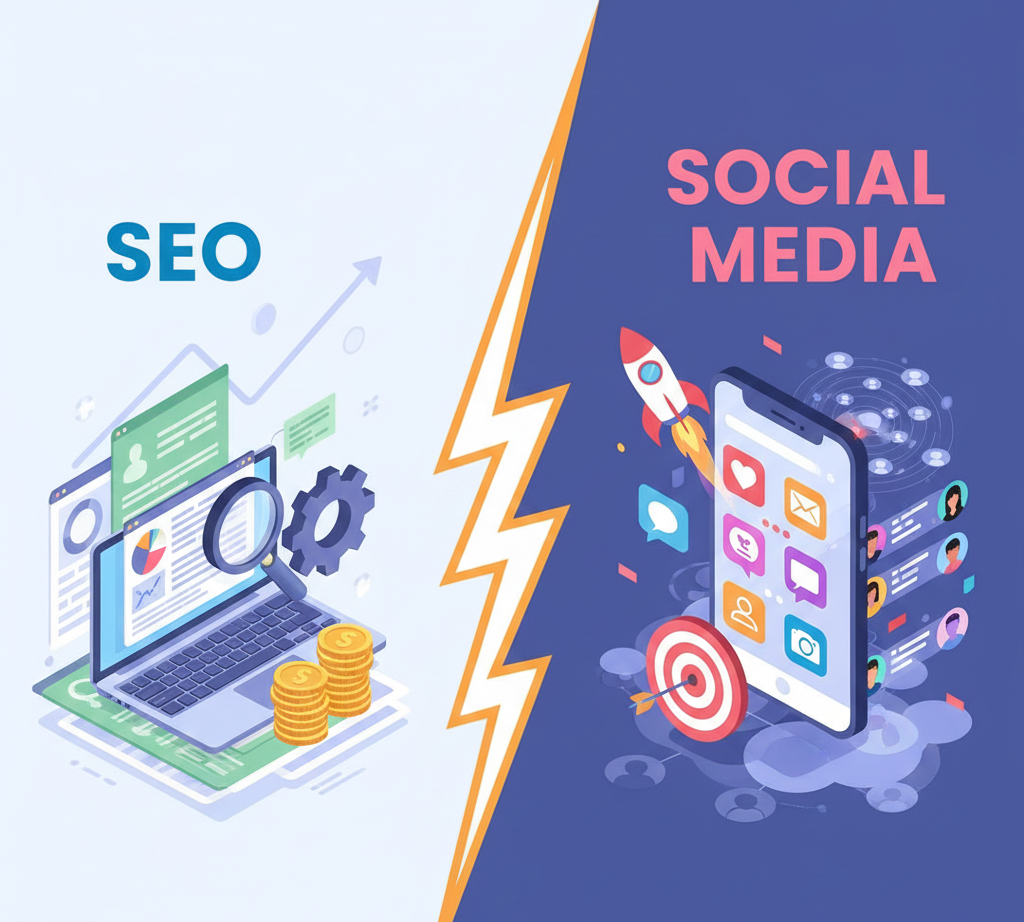
Understand the key differences and how each can boost your business growth.
INTRODUCTION
In today’s digital-first business environment, one of the most common questions brands face is whether they should focus more on Search Engine Optimization (SEO) or Social Media Marketing. Both are powerful digital marketing strategies, yet they serve different purposes and deliver different types of results.
Understanding how SEO and social media marketing work, where they differ, and how they complement each other is essential for creating a balanced and effective digital marketing strategy. Rather than choosing one over the other, businesses need clarity on how each contributes to growth.
UNDERSTANDING SEARCH ENGINE OPTIMIZATION (SEO)
SEO is the process of optimizing a website to improve its visibility on search engines like Google. It focuses on attracting users who are actively searching for information, products, or services related to a business.
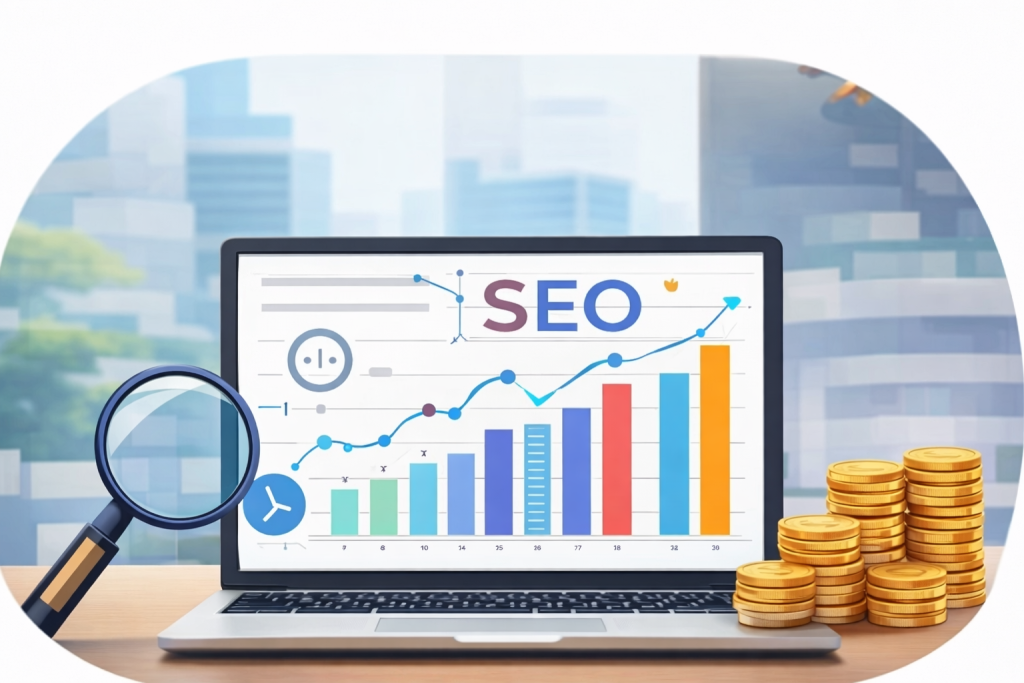
SEO involves multiple elements such as keyword research, on-page optimization, technical SEO, and content creation. One of the biggest strengths of SEO is its long-term impact. Once a website ranks well, it can generate consistent traffic without ongoing advertising costs.
Another key advantage of SEO is credibility. Users tend to trust organic search results more than paid advertisements, which makes SEO a powerful tool for building brand authority and trust over time.
Benefits of SEO for Businesses
SEO offers long-term, sustainable growth. It targets high-intent users who are more likely to convert because they are already searching for a solution.
Additional benefits include:
- Improved website user experience
- Higher brand credibility
- Consistent organic traffic
- Better conversion potential
SEO may take time to show results, but its long-lasting impact makes it an essential component of digital marketing success.
Understanding Social Media Marketing
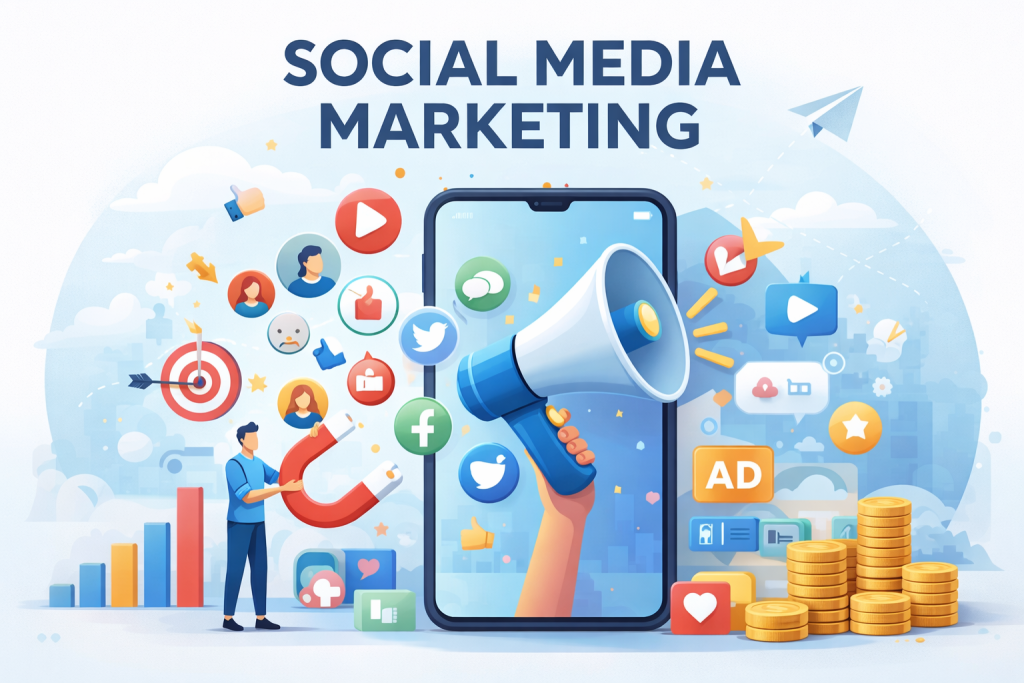
Social media marketing focuses on promoting brands through platforms like Instagram, Facebook, LinkedIn, and X. It emphasizes engagement, visibility, and direct interaction with audiences.
Unlike SEO, social media marketing delivers faster results. Brands can quickly reach new audiences, share updates, and build relationships through consistent content and communication.
Social media also allows businesses to showcase their brand personality, respond to customer feedback, and stay connected with their audience in real time.
Benefits of Social Media Marketing
Social media marketing is highly effective for:
Brand awareness
Audience engagement
Community building
Promotions and campaigns
It also supports paid advertising, allowing businesses to target specific audiences based on interests, behavior, and demographics.
However, social media requires consistent effort. Without regular content and interaction, visibility can drop quickly.
SEO vs Social Media Marketing: Key Differences
SEO focuses on long-term organic growth, while social media prioritizes immediate engagement and visibility.
SEO attracts users with intent, whereas social media introduces brands to potential customers. SEO builds authority over time, while social media builds relationships and brand recall.
Both strategies differ in execution, but they are not competitors.
Which One Is More Important?
There is no single answer. SEO is essential for long-term credibility and sustainable traffic, while social media marketing is crucial for engagement and brand visibility.
Businesses that rely only on one strategy often miss opportunities. A balanced approach ensures steady growth and stronger digital presence.
The Power of an Integrated Strategy
When SEO and social media work together, results improve significantly. Social media can drive traffic to SEO-optimized content, while SEO content provides valuable resources to share on social platforms.
This integration improves reach, engagement, and conversions while strengthening brand authority.
Conclusion
SEO and social media marketing are not rivals—they are complementary strategies. SEO builds long-term visibility and trust, while social media creates engagement and connection.
Businesses that integrate both strategies into a unified digital marketing plan are better positioned for sustainable growth in an increasingly competitive digital landscape.


Leave a Reply